Choose Filter to select conditions to display recoveries by.
Tracking project information. Click individual routes on the map for more information.
Bibliography
References
Dunning, J.; Finch, T.; Davison, A.; Durrant, K.L.2020
. Population-specific migratory strategies of Twite Linaria flavirostris in Western Europe. Ibis162: 273–278
Eaton, M., Aebischer, N., Brown, A., Hearn, R., Lock, L., Musgrove, A., Noble, D., Stroud, D., & Gregory, R.2015
. Birds of ConservationConcern 4: the populationstatus of birds in the UK,Channel Islands and Isle of Man. British Birds108: 708–746
Raine, A. F., Sowter, D. J., Brown, A. F., Sutherland, W. J.Migration patterns of two populations of Twite Carduelis flavirostris in Britain. Rringing & Migration23: 45–52
Loading...
Loading...
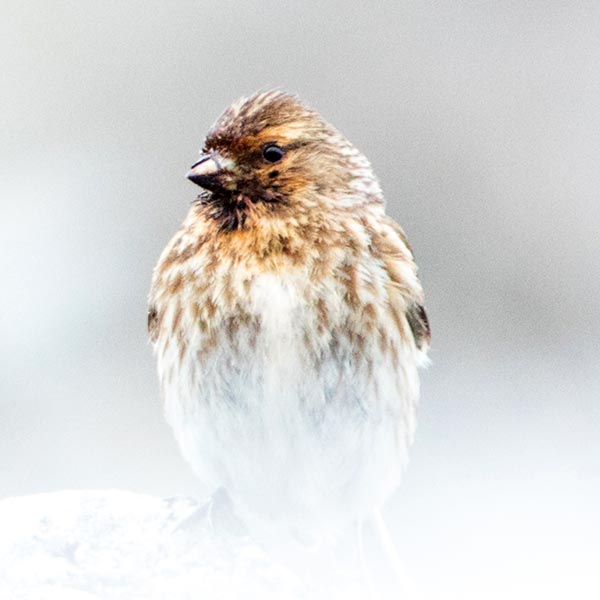
There are several sub-species of Twite - in mainland Europe ssp. flavirostris and ssp. pipilans in Britain & Ireland. The endemic subspecies pipilans is Red-listed (Eaton et al. 2015). In Europe, most populations are migratory.
There are data from NW, W, C and N European regions. Recent analyses of recovery data show high connectivity between breeding and non-breeding areas for pipilans, the British & Irish subspecies (Dunning et al. 2020), which is a short-distance migrant. Mainland populations of flavirostris, roughly follow a N-S or NW-SE axis of migration.
Overall, most recoveries are of recaptured birds (91%). This percentage is similar between periods: changing from 86% before 1961 to 97% from 1991 to present. There is a very high concentration of recoveries in Belgium, most in Oct-Nov, but also in Mar, as a result of intensive ringing campaigns using sound-lures designed to capture actively migrating finches.
Annual Movements for Twite
Movements S to lowlands of coasts and estuaries, principally around S Baltic and N Sea, start from late Aug-late Sep; migration peaks in Oct-Nov. Twite are present in C Europe from Oct, remaining to Mar-Apr. Birds return to the breeding quarters as soon as weather conditions improve, which can be as early as Jan, up to Apr. N Scandinavian populations reach their breeding sites by Apr-May.
Connectivity by Month by Region for Twite
Birds from the British Isles mainly overwinter there (Raine et al. 2006), but some cross the English Channel and are the mainly found in Belgium in Oct-Nov, but many of these of birds are probably still on passage and may go as far as N Italy (one encounter). Scandinavian birds (mainly from W Norway) move N-S, with most recoveries in winter (Oct-Mar, concentrated in Nov-Feb) in S Scandinavia to northern half of C/E Europe.
Dunning, J.; Finch, T.; Davison, A.; Durrant, K.L.2020
. Population-specific migratory strategies of Twite Linaria flavirostris in Western Europe. Ibis162: 273–278
Eaton, M., Aebischer, N., Brown, A., Hearn, R., Lock, L., Musgrove, A., Noble, D., Stroud, D., & Gregory, R.2015
. Birds of ConservationConcern 4: the populationstatus of birds in the UK,Channel Islands and Isle of Man. British Birds108: 708–746
Raine, A. F., Sowter, D. J., Brown, A. F., Sutherland, W. J.Migration patterns of two populations of Twite Carduelis flavirostris in Britain. Rringing & Migration23: 45–52