Loading...
Loading...
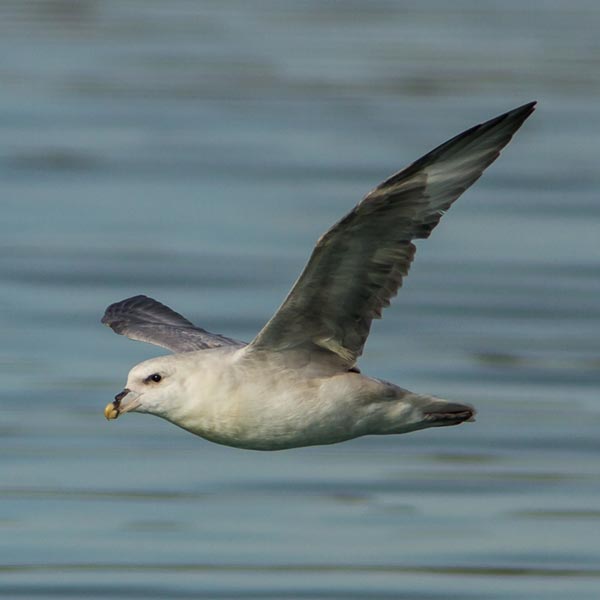
The species breeds mainly on cliffs, rock faces and steep coastal banks – either on islands or mainland, rarely on sand dunes or flatter ground; sometimes – even near or in human settlements. Outside breeding season it is mostly pelagic (Mallory et al. 2020).
It has circumpolar distribution, occurring in Europe in the N Atlantic and Arctic oceans. The European strongholds are in Iceland and Svalbard, followed by the Faroes and the British Isles (Keller et al. 2020).
Oceanic migrant, covering great distances in search of food.
Its population trend in Europe is decreasing. Evaluated as “Least Concern” (BirdLife International 2021).
| Season of assessment | B |
| Population trend | Decreasing |
| Population size (min-max, best estimate) | 6350000-7660000,6790000 |
| Red List category | VU |
Northern Fulmar
Scientific Name: Fulmarus glacialis
Thumbnail
Group
Statistics
Map
| N records | N individuals | N recoveries | |
|---|---|---|---|
| Mapped data* | |||
| Total available data | |||
| *Mapped data include only distant (>= 50 km) recoveries |