Choisir un filtre pour sélectionner les conditions et afficher les contrôles.
Tracking project information. Click individual routes on the map for more information.
Bibliographie
Références
BirdLife International 2022
. Species factsheet: Larus marinus.
Olsen, K. M., Larsson, H.2004
. Gulls of Europe, Asia and North America. Helm Identification Guides, London
En cours de chargement...
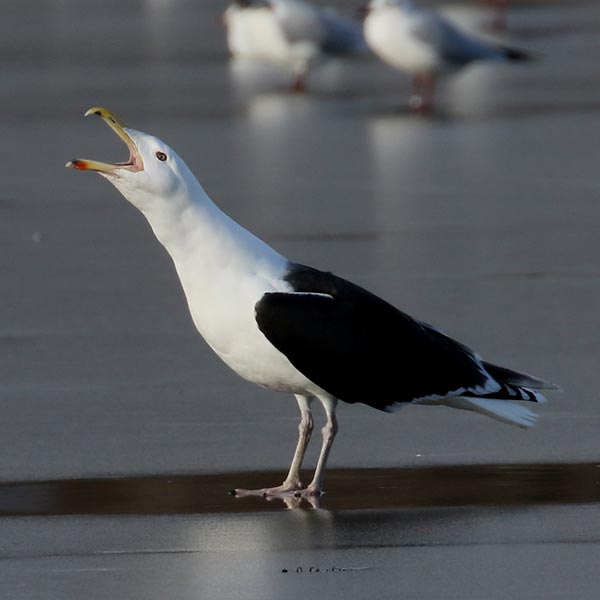
Largest gull in the world with broad breeding range within N Atlantic, from E Canada/USA to the White sea (BirdLife International 2022). In Europe is a coastal seabird breeding from NW Iberia to NW Russia. Strategies vary from resident to partial migrant or migratory; migratory behaviour increases with latitude (Olsen & Larsson 2004).
Main migratory axis is N-S or NE-SW, thus to some extent winter distribution ranges of migrant populations reflect breeding distribution ranges at more S latitudes. Populations from NW Europe (Britain-Ireland) resident or move to S up to from NW Iberia to E Wadden sea (exceptionally, 1 recovery in SW Spain). At same time, UK receives in winter birds from Scandinavia (mainly Norway) to Iceland. Birds from W Europe resident or with short-range movements, normally up to middle part of Atlantic façade of FranceFennoscandian birds tend to be migratory, with strong connectivity: Norwegian/N Finish populations mostly overwinter from Denmark to E Britain/N France; circum-Baltic birds mostly overwinter in along S coast of the Baltic, up to Denmark. Exceptional movements from N America to Europe (from Newfoundland to W Europe), also to Bear island (Bjørnøya).
Overall, most (78%) recoveries due to birds found alive, identified by other means, such as Darvic leg ring(s). Before 1960, most recoveries were due to shot (almost 45%) or birds found dead, sick or wounded (45%). Still up to 1990 most birds were found dead, sick or wounded (60%) or dead by shot (24%). Currently, most (88%) recoveries are due to birds encountered alive, mostly identified from leg ring(s).
Annual Movements for Goéland marin
Post-breeding movements/migration start as early as Jul, especially in case of High Arctic populations (Olsen & Larsson 2004). Main arrival to these N birds to winter quarters in Sep. Migration in N Europe peaks Oct-Nov, though first movements found already in Jul-Aug. Spring migration Mar-Apr. Younger birds move more than adults, especially if coming from S Scandinavia to NW/W Europe (Olsen & Larsson 2004).
Connectivité par mois par région pour Goéland marin
Temporal patterns rather similar for all regions, so for details see Annual movements.